Showing posts with label training. Show all posts

Monday, April 25, 2022

Ways to Make Your Dog to Stop Being a Domestic Terrorist

Dogs are man’s best friend and they can be a great companion to have around the house. But sometimes, dogs can get mischievous and cause trouble in the house when they’re bored or lonely. You may not want your puppy to turn into a domestic terrorist, but how do you stop them from getting into trouble? We have some tips on how you can stop your dog from being a menace in the house!

Now that you know about this issue, it's time for action! Read on for 5 ways that will help make your dog a better pet- each with links to tutorials or informative articles so you don't miss a trick.

1. Providing more socialization.

Dogs are pack animals, and they feel more comfortable being around other dogs and humans if they are exposed to them regularly. They feel less inclined to wander off or cause trouble in the house if you take them on walks or pet them frequently. Socializing your dog helps them become better behaved pets.

2. Educating yourself about dog behavior!


Understanding dog behavior can help you spot when they are under stress, bored, or lonely and know how to deal with them accordingly. Dogs will be more inclined to listen to you if you employ the right methods and understand their body language.

3. Making sure your dog gets enough exercise.

Dogs need to get plenty of exercise if they want to avoid being restless, bored, and lonely. Dogs that are left home alone for long periods of time or separated from their owners can become depressed or anxious due to separation anxiety. You can play fetch with them, take them out for walks regularly, or do other fun things with them to try and curb the boredom.

4. Investing in a loud and attention-getting doorbell.

If you have a dog that is prone to barking at the door, consider investing in a doorbell that makes a loud and attention-getting sound. This way, your dog is less likely to bark at the door if they just hear an obnoxious noise instead. They’re more likely to startle easily around loud noises and not want to listen to them for long periods of time.

5. Teaching your dog good manners!

Dogs can learn amazingly fast when they are young, especially when they are raised with positive reinforcement methods like treats and praise. Use treats to reward them when they do something you want, and praise them when they do the opposite. This can help train your dog and reinforce good behavior!

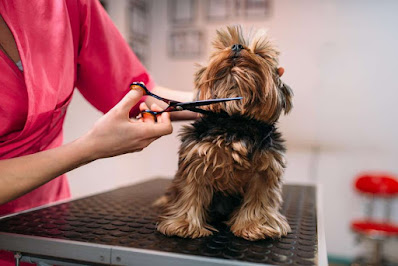
Training your dog well is one way to prevent them from becoming a nuisance in the house. Giving them a good grooming can help them became less anxious. Using some of these tips can help ensure that your dog behaves in a way that you are comfortable with, and prevents them from being a nuisance to other people or making problems for you.

Reference:

How to Properly Trim and Desensitize Dog's Nails

Wednesday, September 1, 2021

Preparing Your Home for Your New Puppy

At the beginning, you have to take care of your puppy's sleeping spot. If you use crates and playpens, your dog will grow up healthy and happy in your home and practice their routine as well. If you were planning on doing free-play and letting your puppy sleep in your bed, take a few minutes to learn about why choosing a playpen and a crate was a good idea! 

As a new pet owner, you want to give your puppy the best home experience and make them happier. Make sure you have these points to remember before you go free-roaming or buying a huge crate. 

Small Spaces

Puppy loves tiny rooms. Most dogs seek the warmth and protection of their pack, and they like to sleep in dens. However, you can never buy a cage your dog can hardly fit into. Your puppy should be able to stand, go all over, and sit down on the top or sides of their crate. Dogs and puppies don't want to litter where they sleep, but using a cage is a great way to cut down on potential potty spots.

Puppy Toys

Before giving your new puppy a stuffed toy, their water dish, water, and any other goodies you might think of, let them rest as well.  Put the dog in their bed and get them used to the habit of staying there. In quiet and in privacy, place your puppy's crate in a peaceful, familiar place that is out of the public eye, and where your puppy can really relax. 

Teething toys will keep your dog occupied as you do household tasks. Spacious enough space is needed in the playpen for your growing puppy. These toys are perfect for your dog to gnaw and rub. Chewing or licking will soothe your puppy when they are stressed. It makes calm them down while they are home.  


Potty Pads

Toilet seats, although potty pads can slow down potty training, they are a useful. The training pads should be placed in a particular location of the playpen, rather than surrounding the whole thing. Marking territory will help the dog go potty. However, if your puppy is young (under 12 week old) and not very effective at using pads, cover the whole playpen area to prevent spills from landing on your ground! When your pup gets older, remove any of the paws, if necessary. We suggest, though, that you adhere to your puppy's routine by taking your puppy outside to potty as soon as possible!


Leaving Your Puppies for the First Time

If you need to leave your puppy for more than four hours, you might consider keeping it in the playpen crated for the first few weeks. Giving the dog their assigned place for sleeping and potty time is a two for one when it comes to exercise. Often, put water down for the duration of your absence just do not let them drink it all. Hint: Bear in mind, before you leave your puppy alone, take some time to see whether they try to tear off pads or not. If your dog does this, you'll want to get rid of the pee pads entirely. Instead, secure the floors and carpets from slippage and wear or wall-or floor or rug,

Tuesday, August 17, 2021

How to Get the Dog to Say His or Her Name

Your puppy or young adult dog may not know his new name when he comes into your house. When you say his name, the dog must understand that you want him to pay attention to you. And the most effective way to do this is to teach him to equate his name with something good.

What's in a Name?

You will use positive reinforcement training to teach your dog to react to whatever name you give him by associating the name with something nice. Obtain a couple of thin, fluffy treats that your dog can chew and swallow fast. It's still a good idea to get a clicker in hand. Begin with a private, comfortable space, such as your living room.

Do the following:

What if the dog isn't glaring at you, so utter the word loudly and cheerfully. As soon as your dog looks at you, use a clicker or a word to signal that this is the correct answer, then promptly reward your dog with a treat. Repeat this procedure many times during the day.

If you're having trouble getting your dog to answer, consider moving to a less noisy and smaller location, or switching is treated to something more valuable to the dog, such as small pieces of cooked chicken or turkey meatballs, while still praising and rewarding.

Say his name as you walk through the room. Or, instead of turning toward you, say his name and wait until he looks at your face before offering the treat. When you consistently get the affection you want, attempt occasional treats but still compliment verbally. Increase the number of distractions and transfer the lessons outside.

Since consistency has been the key you can reiterate this behavior repeatedly until you have an automatic and strong response. Your dog will eventually answer to his name in response to your affection and affection, and rewards will be unnecessary.

Refrain from Negative Associations

Avoid using the dog's name in conjunction with offensive words, since this will transform a positive response to his name into a negative one. Since owners sometimes pair their dog's name with vocal corrections, often dogs dislike the sound of their own name. What you really want is for a dog to equate the sound of his name with something positive.

  • Off-leash training should not be done in a wide environment where your dog can wander off and get distracted; it is preferable to keep your dog on a leash. Starting indoors, where there are fewer obstacles, is potentially the better option.
  • If you utter the dog's name so many times, she will start to expect you to repeat it before she will give you the time of day. Say her name once and then give her the treat if she reacts fast.
  • Don't start calling your dog's name if she doesn't answer right away. Instead, take a stroll with her away from whatever is bothering her and try again, or move to a location with lesser obstacles. Just introduce the preparation in more distracting places until you've regularly gotten a flawless answer.
  • Before you teach your dog an order, don't say her name. You should be able to say "sit," "stay," or "down" without saying the commands name each time. Give the dog the reward right away if she reacts easily. Have a note of the action right away.
Suggested post:

Sunday, August 8, 2021

How to Teach a Dog to Twirl and Spin

Spin, unlike many other seemingly basic tricks, does not need precise timing or sophisticated abilities such as shaping or catching. In reality, the dog needs a brief instruction in “luring” to learn how to spin.

Making an Attractive Lure

Luring is one of the most prevalent techniques of persuading dogs to perform different actions, whether it's for obedience-based instructions like sit and stay or entertaining tricks like roll over and wave. Because enticing does not cause fear or discomfort, it helps dogs to learn and perform activities more rapidly and consistently in the future. Because the dogs must complete the motions rather than being guided into various postures, they are more likely to associate the activity with the order.

Luring entails enticing your dog into various postures using a reward or toy, similar to how a carrot is used to coax a horse into its stall. While the premise is straightforward, making a successful lure requires some understanding and skill.

Maintain Your Dog's Interest

Pulling your dog along by the nose with a high-value reward that they desire to follow is the ideal bait. To begin, select a treat or toy that your dog is particularly enthusiastic about. The second technique to keep your dog engaged is to keep your lures brief and often reward your dog by giving them a treat or allowing them to play with the toy. This not only prevents your dog from thinking you're playing a joke on them, but it also encourages them to continue training. While an appealing lure is important, you don't want your dog to grow overly reliant on it.

How to Get Rid of a Lure

The first step in properly eliminating your lure from a new habit is to determine the best moment to do it. When your dog appears to be expecting the activity, it's time to start eliminating the bait.

How to Fade a Lure

Running through the entire lure may be quicker, but it will help diminish your dog's demand for the lure. You might also try removing the lure's end and allowing your dog to finish the act on their own. Stopping everything at once is the greatest way to lessen the pull.

Teach Your Dog How to Twirl and Spin

Step 1: Decide on a course of action. The first habit we'll teach is what we'll refer to as "spin."

Step 2: Make a large circle with your dog. Take your delectable treat (or toy) and hold it squarely in front of your dog's nose as he stands in front of you.

Step 3: Turn your bait into a hand cue by fading it in and out. You may use any of the lure fading strategies listed above, but speeding up your lure usually works best for this trick.

Step 4: Include a verbal cue. You're ready to label this behavior once your dog has performed a few reps with just the hand cue.

Step 5: Allow time for your dog to perfect the habit. You'll need to allow your dog a few days to learn the spin behavior once they've mastered it with only a basic hand and vocal signal.

Step 6: Reverse the behavior and teach it again. To train your dog to twirl, repeat the instructions above, but this time leads him in a counterclockwise circle.

Suggested post:

When Do Puppy Bite Stop? How Do I Take Care of My Puppy’s Sharp Teeth?

The Process of Using Automatic Pet Feeders

Pet Mobile Grooming

Thursday, July 29, 2021

6 Essential Commands to Teach Your Dog

Like the furry strong-willed kids, dogs usually seemed to have the mind of their individuality. But you may keep them happy and safe with just a bit of love, training and patience. Start by teaching your dog some basic commands.

What You Should Know Before You Begin Basic Training

  • Find a calm, quiet place to train him.
  • Take a unique approach to training your dog by taking into account his or her personality.
  • Keep any language and gestures you use for each command consistently.
  • Stick to a schedule as much as possible, but keep the training sessions short and simple.
  • Be patient with your dog throughout the training process.
  • Use positive reinforcement and reward your dog for their progress.
  • Make it fun and play along with your dog while teaching them new commands.

Try teaching your dog some basic instructions - keep in mind that certain tricks are easier to teach than others.

1. Watch Me

This command is a good place to start since it teaches your dog to respect your authority as the pack leader and to heed your directions. It can also be used to reset if the training sessions get rowdy. Make eye contact with the dog and use a reward to direct their focus from their nose to your face, while saying "watch me" or "look at me" in the process.

2. Sit

Begin by placing a reward near the dog's nose and gently pulling the treat away at an angle. In an ideal situation, the dog will drop their flank until they are sitting. Repeat the technique until the dog has learned and understands the "sit" command. When they do it right, give them some extra love and affection - your dog deserves it.

3. Stay

The "stay" command is effective in any situation, but it is especially effective when a dog is off-leashes. It's a good idea to teach your dog to sit first, then, use the sit command to prepare him for learning how to remain.  Begin with a few steps, and after they have learned the skill to stay until called, reward them with a treat.

4. Come Here

Teaching a dog to come when called should be a priority for any dog owner. Put your dog on a leash and stand at a safe distance, but down at their level to begin. When they come, give them the reward and compliment them on their genius.

5. Down

Begin by placing a delectable-smelling goodie in your closed hand. Place your palm on the dog's snout to allow them to detect the fragrance, then, lower it to the ground. When the dog reaches the ground, slowly slide your fist towards you, causing the dog to crawl towards you. Once they've met you, give them the order, give them the treat, and give them some praise.

6. Drop It

Your dog has to know when to release go of objects. Preventing your dog from picking up or ingesting something damaging to their health is also crucial from a safety aspect.

The bait and switch method are the simplest way to approach the "drop it" or "leave it" instruction. In each hand, there is goodie (closed fists). Then, using your left hand as an incentive, tell your dog to leave what's in your right hand. Keep the reward in your left hand until the dog has completely backed away from goodie in your right.

Suggested post:

Squeaky Toys for Dogs: Sound Advice for Choosing the Right Dog Toy

How Mobile Pet Care Can Reduce Pet Anxiety?

Pets are more than just animals; they are beloved members of our families. Their well-being and happiness are paramount to us, and one of th...